
Why Volatility Matters Here
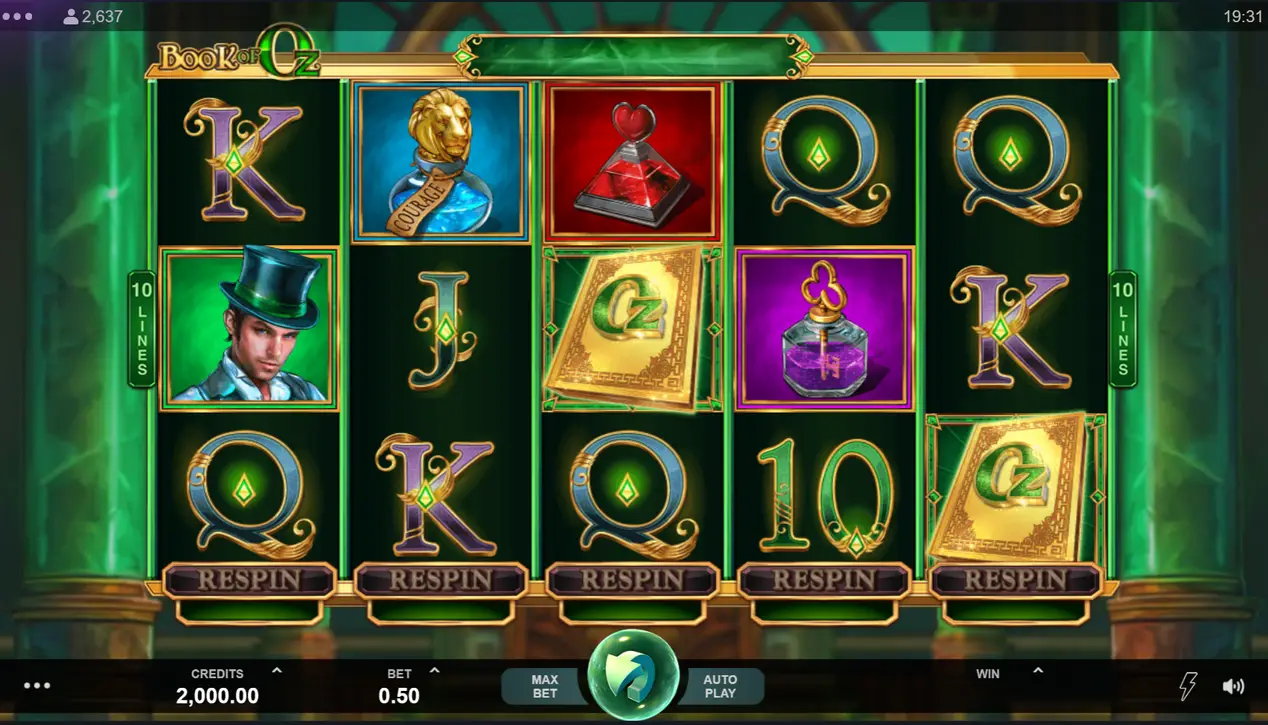
Book of Oz is rated very high volatility by Triple Edge Studios, and that rating shapes how the session actually feels rather than how it looks on paper. Fixed at 10 win lines across a 5x3 grid, the game pays in bursts tied almost entirely to the book symbol — both wild and scatter — landing three or more times to trigger free spins with an expanding special symbol. Between those triggers, base-game returns can run thin for extended stretches, which is the defining trait of high-variance book slots. Age restrictions in Canada apply regardless of how the math plays out: the minimum is 19 in most provinces, dropping to 18 in Alberta, Manitoba, and Quebec. Anyone below the applicable threshold should not access real-money play, and operators are required to enforce this at account verification.
Setting Limits Before You Spin
A very-high-volatility title like Book of Oz is built around infrequent but potentially larger swings, not steady incremental returns. That structure makes pre-session limits more relevant than usual, not less. Deciding on a loss ceiling and a time budget before the first spin removes the temptation to chase a dry stretch waiting for the book symbol to land its third or fourth appearance.
The paid respin feature on individual reels is worth flagging in a responsible-play context specifically because it introduces an extra spending decision mid-session. It's an optional mechanic, not a requirement to trigger free spins, and treating it as a discretionary extra rather than a routine cost keeps the session's total spend closer to what was originally planned.
Most licensed Canadian-facing casinos offering Book of Oz provide built-in tools: deposit limits, loss limits, session-time reminders, and self-exclusion options. These sit at the account level rather than the game level, so they apply across every title played on that platform, not just this one. Setting them once at account creation is more effective than trying to self-regulate mid-session on instinct.
The demo version of Book of Oz, where available through casino platforms, lets a player learn the paytable, the book symbol's dual role as wild and scatter, and the rhythm of the free-spins round without financial risk. Using the demo to understand pacing before switching to real stakes is a reasonable way to separate learning the game from wagering on it.
Age verification is not a formality players can bypass by claiming a higher age. Canadian operators are required to confirm identity and age — 19 in most provinces, 18 in Alberta, Manitoba, and Quebec — before real-money play is permitted, and underage access attempts are a compliance failure on both sides.
If a session on Book of Oz, or any slot, starts to feel compulsive rather than recreational — chasing losses, extending time limits repeatedly, or gambling with money earmarked for other obligations — that's a signal to stop and consult a support resource such as a provincial problem gambling helpline rather than continuing to play.